Origin story · December 2020–Present
It started with a misspelled email
A Grade 12 student, a GPT-3 access request, $20 of credits and the things I kept building afterwards.
See the original emailsOn 1 December 2020, I emailed Greg Brockman at OpenAI. I was in Grade 12 in India and wanted to try GPT-3. My email talked about revision notes, understanding difficult texts and making a good education accessible to more people. I also said I hoped it would help me become a teacher one day.
Four days later, an invitation arrived to join the openai-api Slack workspace, with Greg’s name on it. This was during the early GPT-3 API period. ChatGPT would come later. The original request and invitation are below.
I started experimenting and used up the $20 of credits quickly. I did not predict how large AI would become. I just wanted to see what I could do with it. I also managed to spell GPT-3 as ‘GTP-3’ in the email subject, which feels like a fair record of how early I was in the learning curve.
The original emails.
The access request
My Grade 12 email to Greg Brockman asking to try GPT-3 for learning and education.
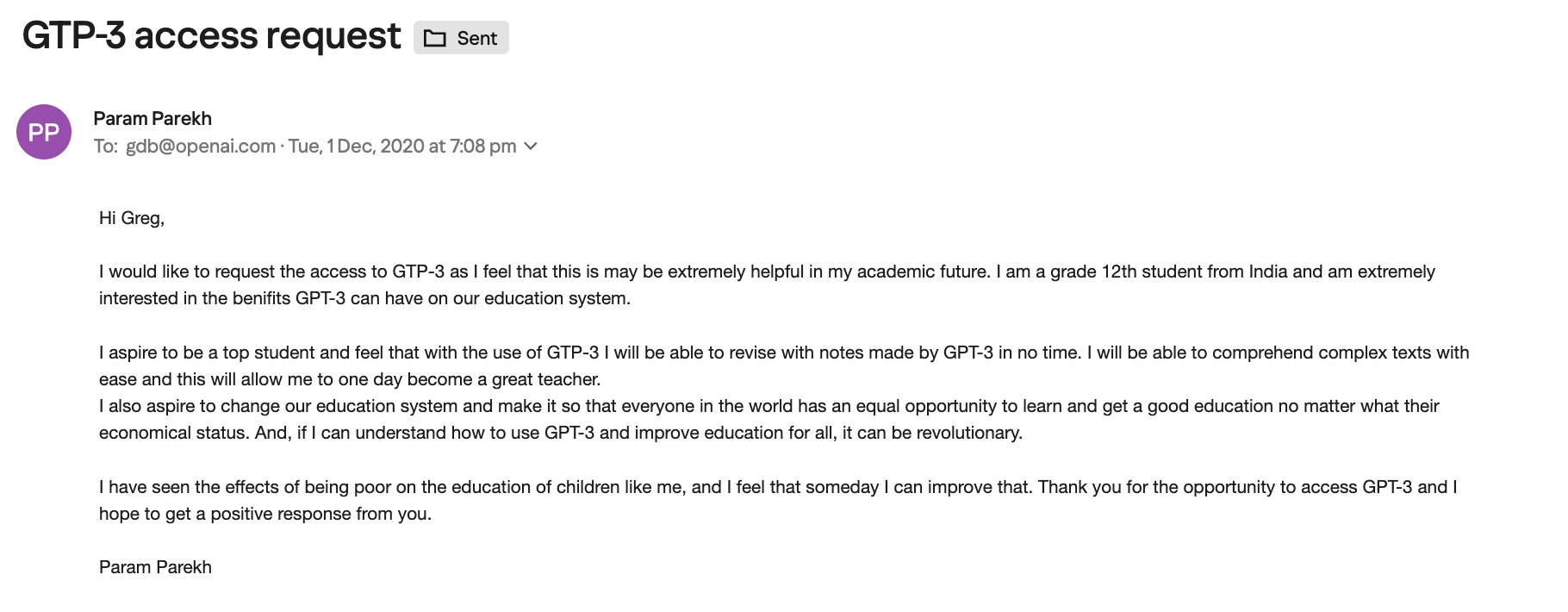
“I will be able to comprehend complex texts with ease”
The Slack invitation
An invitation naming Greg Brockman and the openai-api workspace.
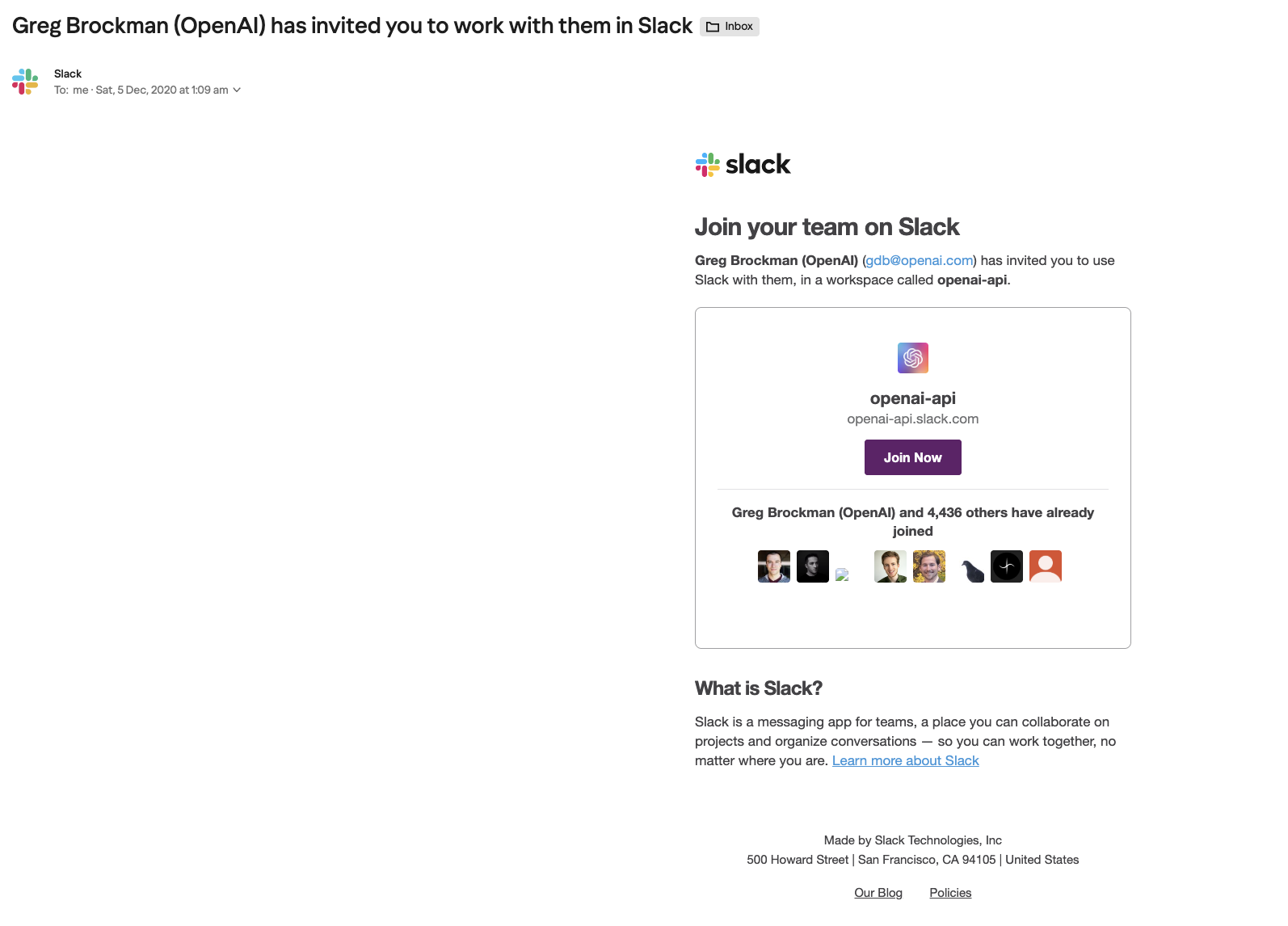
“in a workspace called openai-api.”
In college, I began teaching myself to build. Our online-class timetable kept changing, so I learned AppGyver and connected it to Firebase. On 31 January 2022, I sent the app to my 77-person section on WhatsApp. It kept meeting links, resources and our timetable in one place, along with a few jokes only our class understood.
At XPro Tutors, I used early AI tools in marketing work. At Enactus, I helped build a shared database of AI and online tools for the R&D team. At Cairros, I researched AI and SaaS products by business use case. Those were small experiments, but they trained me to start with a job that needed doing instead of a tool looking for a purpose.
KPMG gave me the other half of the habit. Internal audit taught me to look for the source, separate an exception from a pattern and discuss a finding with someone who understood the process better than I did. That discipline now sits underneath the things I build with AI.
At Masters’ Union, I built Email Command Centre because deadlines and useful opportunities were getting buried in email. A classmate told me another dashboard would be one more place to check, so I added a briefing in the inbox. ClassOS came from losing the thread in class. SleepQuest came from a campus joke that already lived in WhatsApp. In each case, the problem existed before the product did.
AI is not the whole story. My APSEZ investment thesis used research, valuation and judgement to reach a conclusion I did not begin by wanting: do not invest at the price on 10 July 2026. That submission helped me earn a place on the Masters’ Union Investment Fund’s Listed Equities team.
I am still learning what deserves to be automated and what should stay with a person. The tools change quickly. The part I want to keep is simpler: notice a real problem, understand the evidence and make something useful enough that another person chooses to use it.